


Phone Pouches vs Phone Lockers: Which Is Best for Schools?

A comprehensive buyer’s guide for UK schools wanting to create distraction-free learning environments.
UK schools are under pressure to reduce mobile phone distractions. A mobile-free education setting has been proven to improve behaviour and create calmer classrooms, making it easier for young people to focus on their work. At the same time, Ofsted is increasingly scrutinising digital discipline in schools. All this means leadership teams are busy comparing phone pouches for schools and school phone lockers, the two leading approaches.
We have created this comprehensive guide to help senior leaders, safeguarding teams and operations managers make an informed, commercially confident decision about which method to choose. While around 75% of our guide is educational, we will also show you where FoneAway-phone-pouch.co.uk fits into the scheme of things as one of the UK’s most trusted resources for distraction free school environments.
What Schools Are Trying to Solve
Mobile phones create three core challenges for schools and the pupils they teach:
- Constant distractions from social media, messaging and notifications
- Serious safeguarding risks presented by covert filming, bullying and inappropriate content
- Ongoing behavioural disruption, with arguments about phone confiscation and inconsistent enforcement.
Lockable phone pouches and school phone lockers both aim to completely remove phones from the learning environment. The question is, which method delivers the best balance of security, cost, student experience and operational simplicity.

How They Work
Phone Pouches
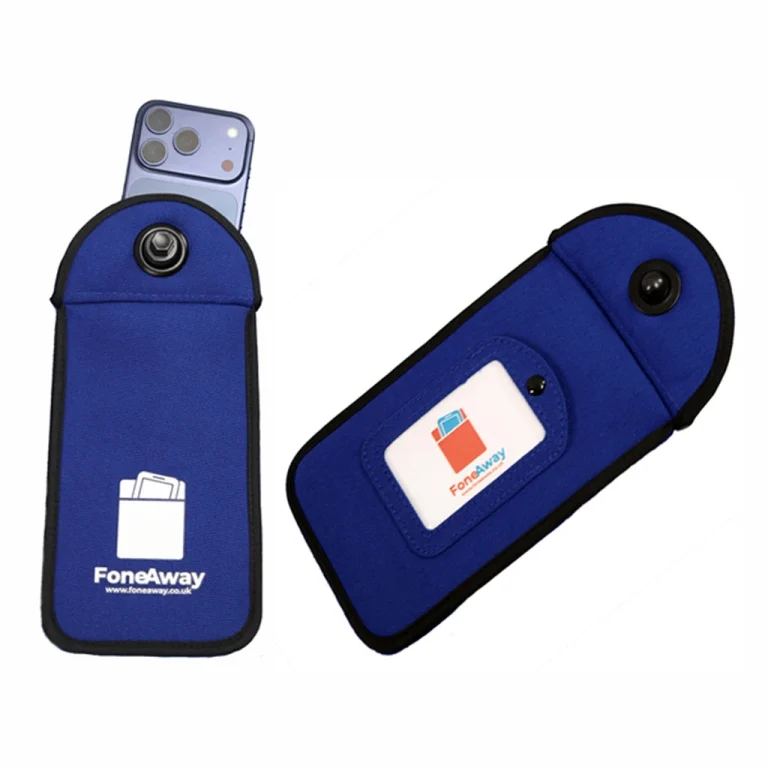
Lockable phone pouches are given to students at the start of the day. They put their phone inside, the pouch locks magnetically, and it stays sealed until it is unlocked by staff.
Fast deployment keeps things efficient, taking just seconds per student. Because the pouch is portable, students keep it and their phone with them. Other than the deployment of magnetic unlocking facilities, there is no infrastructure to put in place and no significant installation of any kind. And phone pouches are simple to scale up, suitable for schools with anything from 300 to more than 2000 pupils.
Phone Lockers
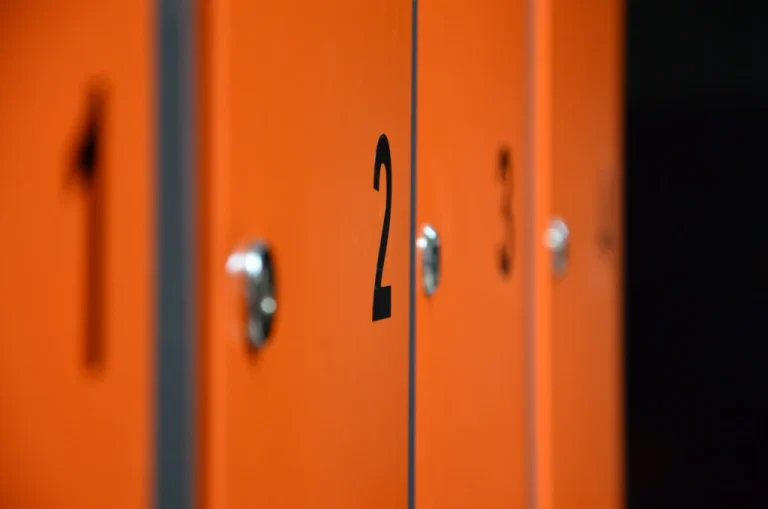
Phone lockers are equally simple. They operate like mini-cubby storage. Students put their phone into a numbered compartment and can’t retrieve it until the end of the day.
Because phone lockers involve fixed infrastructure a school needs enough suitable wall space. The lockers need to be installed by an expert. Centralised control means mobile phones are stored away from students, not carried with them. The throughput is slower, with queues inevitably forming at busy drop-off and pick-up times.

Durability: What Schools Need to Know
Durability is one of the biggest differentiators between the various pouch systems available on the market. Insight Security’s in-depth independent evaluation of multiple pouch brands found many low cost pouches split at the seams within weeks, which means they need frequent replacement. Cheap magnetic locks tend to fail under mild force, which means they’re not as secure as they need to be. And some fabrics degraded disappointingly fast when cleaned with perfectly standard school disinfectants.
These findings directly informed Insight’s development of the FoneAway pouch, a quality product with reinforced stitching, industrial grade magnetic locks and tough, wipe clean materials, engineered to outperform the weak points identified in poorer quality phone pouch designs.
Lockers, by contrast, are much more durable, but in the rough and tumble of a school setting they are prone to all sorts of physical issues. The lockers themselves come with higher maintenance because they depend on keys, locks and hinges. Locks can break and jam, keys get lost and stolen and hinges suffer from wear and tear, needing replacement. For high traffic secondary schools, these maintenance issues can quickly become expensive, an ongoing cost to factor into stretched school budgets.
Locking Systems: Security Matters
Phone Pouches
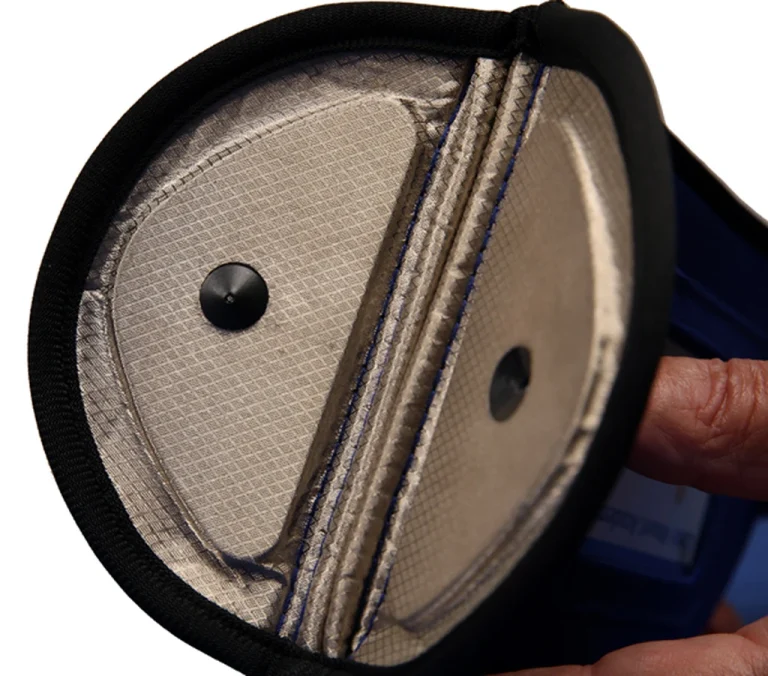
Modern lockable pouches use strong magnetic locking mechanisms. The body of the pouch has tamper resistant seams and staff have complete control of the unlocking bases. The best systems, including FoneAway, are fitted with industrial strength magnets that can’t be opened without the authorised unlocking base. At the other end of the scale cheaper imports often contain weak magnets that students can easily pry open.
Phone Lockers
Phone lockers rely on padlocks, keyed locks or expensive digital locks but as we’ve mentioned, keys get lost and stolen and padlocks get cut. Digital locks work on batteries, an ongoing expense for cash-strapped schools, and all this adds up to a considerable ongoing administrative burden for busy staff.

Signal Blocking: Do Schools Need it?
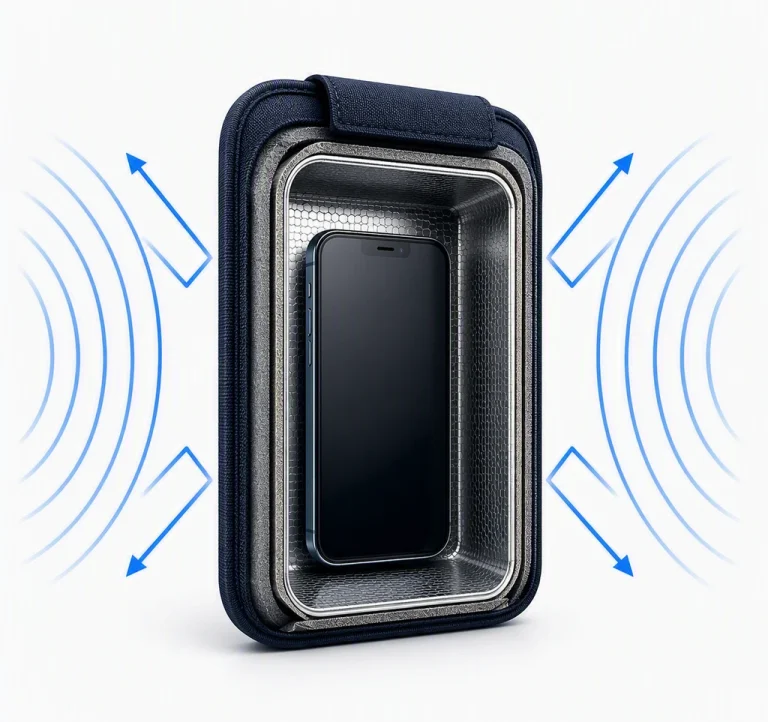
Signal blocking pouches work on a Faraday-style basis, preventing mobile phones from receiving calls, messages and notifications. While a good quality phone pouch prevents access it doesn’t prevent the enclosed phone from ringing, pinging or vibrating. That’s why our FoneAway phone pouches include effective RFID signal blocking technology to prevent phones from emitting distracting alert signals.
Lockers, in contrast, don’t block phone signals unless they have been specifically designed with metal enclosures, adding more to the cost.
Student Experience
Phone Pouches
Looking at the student experience, pouches let pupils keep their phone on them, but they can’t access it.
This reduces conflict because there’s no need to confiscate their gadgets, and cuts down any anxiety they might feel being separated from their phone. Pouches support a consistent whole school policy, and also minimises queues and bottlenecks. The process is smooth, efficient and simple.
Phone Lockers
Students have to queue in the morning to put their phones in lockers, then queue again at the end of the day to collect them, eating up a lot of valuable time for them and for staff. Phones are stored away from students, something some schools do prefer. But there’s also a higher risk of disputes over lost or wrongly-assigned phones. It’s interesting to note how school behaviour teams often report pouches create calmer transitions and less confrontation, which benefits everyone concerned.
Cost Comparison
Phone Pouches
Phone pouches come with a low upfront cost. There’s no installation, no complex infrastructure, and minimal maintenance. A predictable replacement cycle helps schools budget accurately. As long as the school buys good quality pouches they come with a typical lifespan of 2–4 years depending on usage and cleaning.
Phone Lockers
Phone lockers can cost anywhere between £2,000–£10,000 depending on the number of lockers required and the complexity of the installation, which has to be carried out by a professional. There’s potentially a lot of ongoing maintenance, with replacement parts needed. For most schools, pouches deliver a better cost-to-impact ratio.
Cleaning & Hygiene
Phone pouches have to be good enough quality to withstand the type of antibacterial sprays and wipes typically used by schools. They are handled constantly, and can be exposed to moisture. While cheap pouches can degrade quickly, FoneAway’s materials have been carefully researched, chosen specifically to survive school cleaning routines without cracking or peeling.
Lockers require regular wipe downs, occasional deep cleaning, and the ongoing physical maintenance of keys, locks and hinges previously mentioned.
Lifespan
The lifespan of a phone control system depends directly on the quality of the build. High quality pouches can typically last for 2 to 5 years. Low quality pouches can last just a few months, sometimes just a few weeks. FoneAway pouches have been carefully designed, manufactured and tested to ensure they are the best available, offering a prolonged, active lifespan, backed up by a reassuring warranty.
Lockers should see you through 5 to 10 years with good maintenance, but tend to come with higher lifetime costs thanks to ongoing repairs.
The Range of Options Available Today
These days schools can choose from:
- Magnetic, lockable phone pouches
- Signal blocking phone pouches
- Tamper proof reinforced pouches
- Wall mounted phone lockers
- Free-standing phone locker units.
The quality varies dramatically. Insight Security’s in-depth evaluation revealed how many imported pouches fail even the most basic durability tests. In contrast FoneAway has been developed specifically to address these weaknesses, making it one of the few UK engineered solutions designed for tough real-life school conditions.
Which Is Best for Schools?
For most UK schools, lockable phone pouches offer the best deal as well as the best performance. They’re low cost, faster to deploy than lockers, and the student experience is better. There are fewer maintenance issues, compliance is stronger, and whole school roll-out is easier. While phone lockers remain useful for small schools and some specialist environments, they rarely deliver the same operational efficiency as simple, well designed, well made, good quality phone pouches.
Final Recommendation
If your goal is to create a distraction-free school with minimal disruption, high durability models like FoneAway’s lockable phone pouches are the most effective, scalable, and cost efficient solution.
FAQs
Here are some quick answers to some of the most frequently asked questions regarding the selection of the best mobile phone management system for schools.
Click here to see more Frequently Asked Questions about School Phone Pouches.