


How to Introduce Phone Pouches Without Student Resistance

Are the pupils at your school ready to use mobile phone pouches?
Introducing a new mobile phone policy can be challenging for any school. Introducing a system to physically prevent young people from accessing their phones at school might seem even more difficult. In fact, student resistance does not have to be inevitable. With all the information you need at hand and a plan to follow, your school phone pouch rollout should unfold smoothly. It could even be a roaring success.
The key is understanding how successful implementation is not simply about buying enough pouches and telling students to use them. Subtler than that, it’s about good communication, consistency, preparation and creating a school culture where the new system is seen by everyone as a normal part of the school day.
For headteachers the overall objective is straightforward: build a phone-free learning environment while minimising conflict, disruption and unnecessary workload for staff. With the right approach, a phone pouch system can become an everyday piece of school equipment rather than another source of confrontation between pupils and teachers.
Why Are Students Likely to Resist Phone Pouches?
It is important to understand why students might not be happy about the idea. For many young people a mobile phone is not just a device. It’s their connection to friends, family, social media, entertainment and the wider world. Being asked to put it somewhere they cannot access it can therefore feel like a significant loss of control, like losing a lifeline.
They might also have some practical concerns.
- What if my parents need to contact me?
- What if there is an emergency?
- What happens if when need my phone after school?
- What if I lose my pouch?
- Will my phone be safe?
- Why can’t I just keep it switched off?
- Why do we need pouches when we already have a school phone policy?
These are reasonable questions, not to be dismissed, and there are likely to be many more. Pupils need clear answers before the new policy takes effect.
The Department for Education’s current statutory guidance says schools should have a mobile phone policy prohibiting use throughout the school day, including lessons, breaktimes and lunchtime. It also emphasises how important it is to communicate the policy to pupils and parents and apply it consistently. All this makes communication a vital part of implementing a phone pouch system.

Start With the ‘Why’, Not the Pouch
One of the simplest mistakes is to introduce the equipment before explaining the reason for the change. Like all of us, students are much more likely to accept a new rule when they understand what their school is trying to achieve. The most successful conversations focus on learning, concentration, behaviour, wellbeing and relationships rather than the phone pouches themselves.
You are introducing a phone-free school day because you want school to be a place where everyone can concentrate, learn and spend time with friends without the constant distraction of mobile phones, establishing a shared goal. Framing the message this way instead of saying something like ‘You are getting a phone pouch because you can’t be trusted with your phone’ avoids arguments.
Explain the benefits students will notice
It is important to tell students exactly what will change and how this will be beneficial for them. The DfE’s current guidance specifically talks about creating a calm environment conducive to teaching and learning as an important objective behind restricting mobile phone use. Another objective is to boost face-to-face socialising at school.
A phone-free environment means fewer classroom interruptions and distractions, no pressure to respond to messages immediately, fewer opportunities for social media conflict during the school day, more ‘in real life’ face-to-face conversations and clearer boundaries between school and online. A consistent approach across the whole school means everyone’s in the same boat.
Don’t Present the Pouch as a Punishment
This is perhaps the most important principle for a successful rollout. A phone pouch should be presented as school equipment not a punishment, an approach backed by research. The DfE’s own 2026 case studies are a good example. One secondary school using lockable pouches says it treats the pouch in the same way as any other essential piece of equipment, like a pen or calculator. Pupils are expected to have it with them and ready for use every day, and using their phone pouch should quickly become a habit.
It is much more effective to say ‘This is how we manage mobile phones during the school day’ than ‘We are taking your phone away’.

Give Students Plenty of Notice
A sudden change is much more likely to prompt resistance. Ideally, students should hear about the new system several weeks before it happens, giving you plenty of time to answer their questions.
- Why the policy is changing
- What the new rules are
- How the pouches work
- When pupils will lock their phones away
- Where and when they can unlock them
- What happens if a pouch is lost or damaged
- How parents can contact the school
- What happens in an emergency
- What exceptions or reasonable adjustments apply
- What happens if the policy is deliberately breached.
When your school repeats the answers through assemblies, tutor time, newsletters, letters home, the website and parent communications, it beds in. Then, on the first day of the new system, students will be prepared.
Involve Students Before the Rollout
The opinions of the students themselves are extremely useful for improving implementation, but they do not need to be involved in negotiating whether the school should have a phone-free policy in the first place. The headteacher and governing body remain responsible for the school’s policy.
Rather than assume, ask students what concerns them most. Some ideas for questions:
- What worries you about the new system?
- What questions do you think parents will ask?
- Where do you think queues could develop?
- What would make the process easier?
- What problems might happen during the first week?
Getting input from the people who probably know their school best of all can uncover practical problems adults may not have thought of. It also gives students a sense that they have been listened to, ultimately making the implementation a lot more effective.

Get Parents on Board Before You Start
Parents can either become a school’s greatest ally during a phone policy rollout or an extra source of resistance. The difference lies in your communication style. Parents need to know the policy is not designed to prevent them contacting their children. They want clear information about how to contact the school during the school day and how genuine emergencies will be handled.
The DfE has published guidance to help schools communicate mobile phone policies to parents. It recommends explaining the benefits of the policy and working directly with parents if a child needs an adaptation or reasonable adjustment.
It helps to answer the obvious questions before they’re asked. A calm, comprehensive parent communication covering all this should prevent a surprising amount of confusion:
- Why is the school introducing the system? – Explain the educational, behavioural and wellbeing objectives
- Can my child still bring a phone to school? – Explain exactly what your policy permits
- Can my child access their phone during the school day? – If there are any, explain the circumstances when access is allowed
- How can I contact my child? – Give parents a clear alternative route through the school
- What happens in an emergency? – Explain the school’s procedure
- What happens if the pouch is lost or damaged? – Set out the school’s policy.
Make the Process Extremely Simple
The best phone pouch systems are easy for students and staff to understand. It should be simple enough to quickly become a habit. Arrive, secure your phone, carry your pouch, learn, unlock, leave. The fewer decisions students have to make, the easier the system becomes.
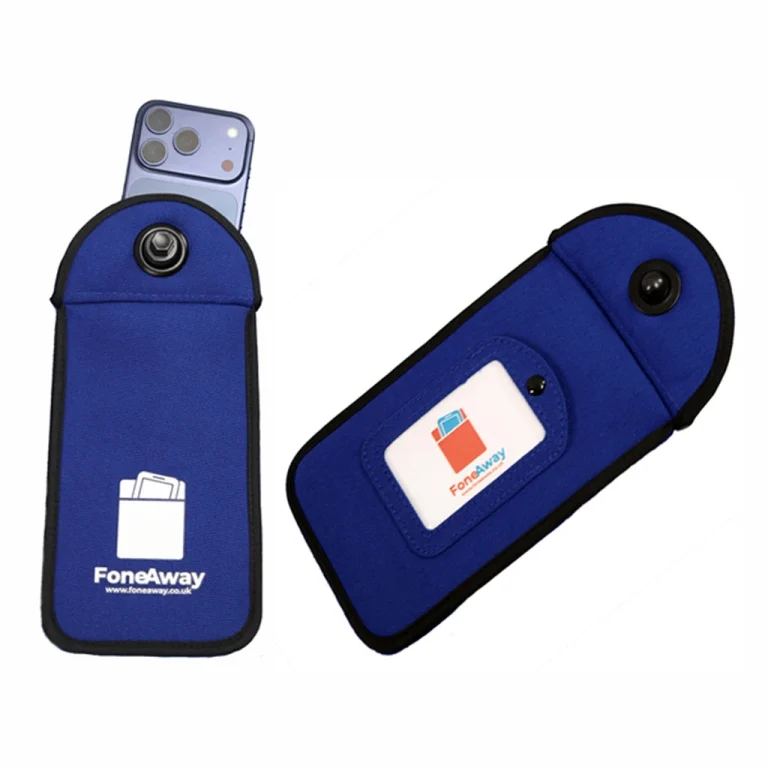
Students arrive and place their switched-off phones into their individually allocated pouches. During the school day they keep their locked pouches with them. At the end of the school day they use an authorised unlocking point to access their phones. FoneAway lockable phone pouches, for example, are designed around this type of individual-ownership model.
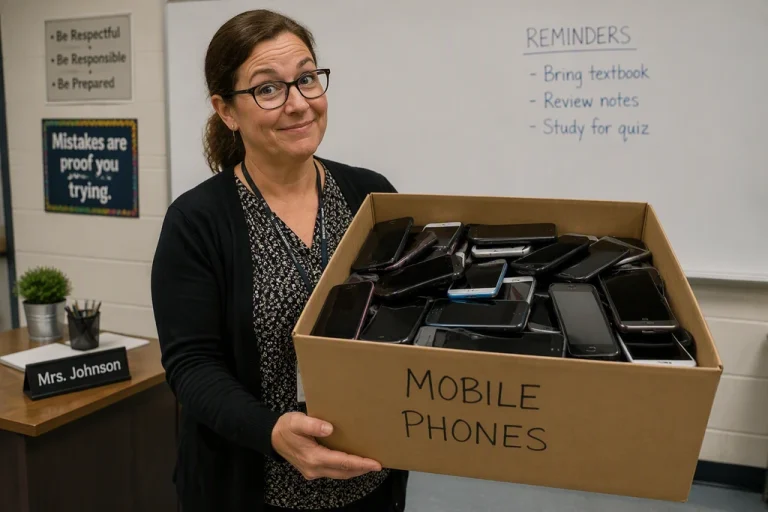
As you can imagine a phone pouch system also means staff don’t need to collect hundreds or thousands of devices every day, store them securely, make sure they don’t get mixed up, and give them all out again at the end of the day.
Avoid Creating Queues and Bottlenecks
A technically excellent phone policy can still fail when the actual physical process is badly designed. Can you imagine a thousand students all trying to unlock their phones at one unlocking point at 3.15pm? The queue would be a huge problem. So while planning your school’s system, walk through the school as if you were a pupil and see what they see.
How many entrances and exits are there? Do students use different exits? Where do students normally congregate? How many leave at the same time? Do buses create a tight departure window? Where can we put unlocking stations without creating congestion? What happens in bad weather? What happens if an unlocking device stops working?
The DfE case studies show schools are taking different approaches to mobile phone management, including pouches, collection systems and restrictions on bringing phones onto school premises. There is no single operational model that will suit every school. The best solution fits the school’s buildings, pupil numbers, timetable and culture.
Consider a Pilot Before a Full School Phone Pouch Rollout
However many pupils you have, it’s sensible to test the process before introducing it across the whole school. A pilot can reveal practical problems with pouch distribution and identification, locking and unlocking, timings, staff responsibilities, exit arrangements, damaged and lost pouches, student questions and parent communication.
A pilot might involve one year group, one house or a representative group of students. You could involve students in the test, maybe holding a competition to decide who takes part and helping to achieve student buy-in. The idea is to find out any problems, so ask those involved to record their experiences then fix them before the full school phone pouch rollout.
Make the First Week a Managed Transition
Even a well-planned system can generate resistance at first. It’s normal. Some students will turn up without their pouch. Some will put their phone in the pouch incorrectly, others will claim they did not know the rules. As you already know, some will deliberately test the boundaries. Your response during the first week will affect the system’s success. Be firm, but don’t turn every mistake into a confrontation.
If a pupil forgets their pouch, deal with it according to the school’s published procedure. If a pupil deliberately breaches the policy, apply the appropriate consequence. But avoid creating a dramatic confrontation over every minor mistake. The objective is to establish a routine, creating a habit not winning battles.
Consistency Is More Important Than Severity
One of the biggest problems with mobile phone policies is inconsistent enforcement. If one teacher allows phones in pockets, another insists they are locked away and a third confiscates them, students quickly figure out that the rules depend on who’s there at the time. To avoid arguments you need to be consistent school-wide.
In this context, consistency matters much more than student compliance. Every member of staff should know what the policy says, what students are expected to do, what counts as a breach, what they should do when a breach occurs, when a phone should be confiscated, who deals with repeated breaches and which, if any, exceptions apply.
Ofsted’s current inspection guidance says inspectors will look at whether staff and pupils understand the school’s expectations, if the policy is being followed consistently and what impact it has on learning, behaviour and wellbeing.
Make the Rules Visible
Do not hide your mobile phone policy deep inside the school’s website. Students, parents and staff should be able to find the full version easily. For a belt-and-braces approach, include a short version in student planners, Reception, classrooms and corridors, assemblies, parent information, new-starter information and staff handbooks.
The simpler it is, the easier it is to remember and enforce. You might say:
- Mobile phones are not used during the school day
- Phones must be switched off and secured in the school’s approved system
- Phones are available again at the end of the school day.
Plan for Exceptions and Individual Circumstances
A good phone policy is firm but not inflexible. The DfE guidance recognises schools might need to make adaptations and reasonable adjustments in some circumstances, including disability and medical needs. You need to consider these before phone pouch implementation so you are prepared and a parent doesn’t have to ask complicated questions about their child’s circumstances on their first day.
Identify pupils who might need medical access to a device, a reasonable adjustment, alternative arrangements, extra support understanding the policy or a different way to store and access their device. The staff responsible for these pupils should know exactly what the agreed arrangement is. The idea is to control and predict exceptions rather than letting them undermine the whole policy.
Think About Staff Phones Too
Students will notice very quickly if staff are telling them to put their phones away while openly using their own. But it doesn’t mean staff can never use phones. There will be legitimate reasons for staff to use mobile devices during the school day but the school should establish clear expectations for staff as part of the overall policy. The cultural message should be this is something the whole school community takes seriously, much more powerful than simply telling pupils what they can’t do.
Choose the Right Phone Pouch System
Once the school’s policy and procedures have been designed, you can focus on the equipment. This is where schools need to take care because all phone pouches are not equal.
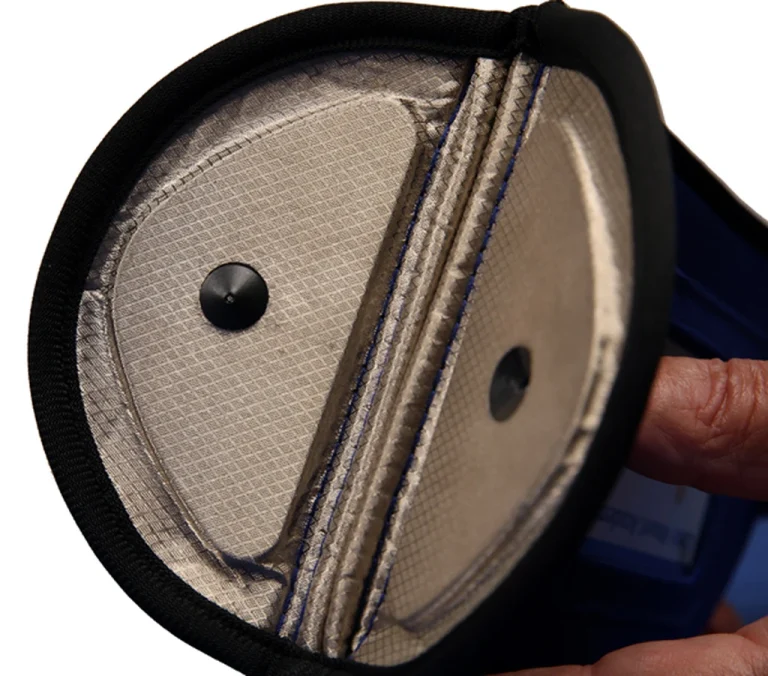
First, assess a system based on its durability. Pouches need to withstand daily use by hundreds or thousands of students. Look at the stitching, materials, padding, closures and the area around the locking mechanism. Then look at how easy it is to use. Students should be able to secure their phones quickly without complicated instructions.
A clear identification system helps students recognise their own pouch and reduce mix-ups. And the range of phones used by students matters, including larger smartphones and devices inside protective cases. Think about how many unlocking points the school needs and where they should be located. Consider security. Look at the way the locking mechanism works and how authorised unlocking is controlled. Last but not least, bear in mind that a good supplier will be able to help with deployment.
Give Every Student Responsibility for Their Own Pouch
Individual pouch allocation makes the system a lot easier to manage. Rather than creating central storage every student has responsibility for their own pouch. The pouch effectively becomes another piece of school equipment, helping to avoid staff handling hundreds of phones, lost property problems, phones being returned to the wrong pupils and extra safeguarding concerns around centrally stored devices.
This also reinforces the idea that the school is not confiscating students’ phones. The student still owns and retains the device. They simply can’t use it during the school day.
Don’t Forget Lost and Damaged Pouches
This is one of the less glamorous parts of implementing a phone pouch system, but it needs to be addressed. Your policy should explain clearly who owns the pouch, what happens if it gets lost or is deliberately damaged, how you get replacements and if you charge parents for replacements. Lay out what happens while a replacement is being arranged.
It makes sense to order more than you need. FoneAway recommends schools consider a contingency allowance when ordering, rather than buying exactly one pouch for every student.
What Does a Successful Phone Pouch Rollout Look Like?
After a few weeks, the ideal situation is surprisingly unremarkable. Students arrive. Phones go into pouches. The pouches remain locked. Lessons take place without phones. Break and lunchtime are phone-free. Students socialise. Teachers teach. At the end of the day, students unlock their devices and go home. There is no daily drama. No arguments about whether a phone should be confiscated. When the system quietly becomes part of the school routine, you have succeeded.
Celebrate the Results
Once the system is established, don’t focus exclusively on enforcement. You have made a great decision, implementing it in a way pupils, parents and staff appreciate. The system is bedding in nicely. Celebrating the results brings everything to a neat closure.
For evidence the change is working, measure and compare levels of classroom disruption before and afterwards, along with behaviour incidents, lesson removals and phone-related incidents. Keep an eye on online bullying reports, punctuality, feedback from students, teachers and parents, breaktime activity and student interaction, and share the positive results.
A phone-free policy isn’t about creating a perfect enforcement system, it is about building a better school environment. When teachers report calmer classrooms, tell parents. When students report better social interaction, praise the students. When staff are spending less time dealing with phones, tell the governors.

FoneAway: A Practical Solution for Phone-Free Schools
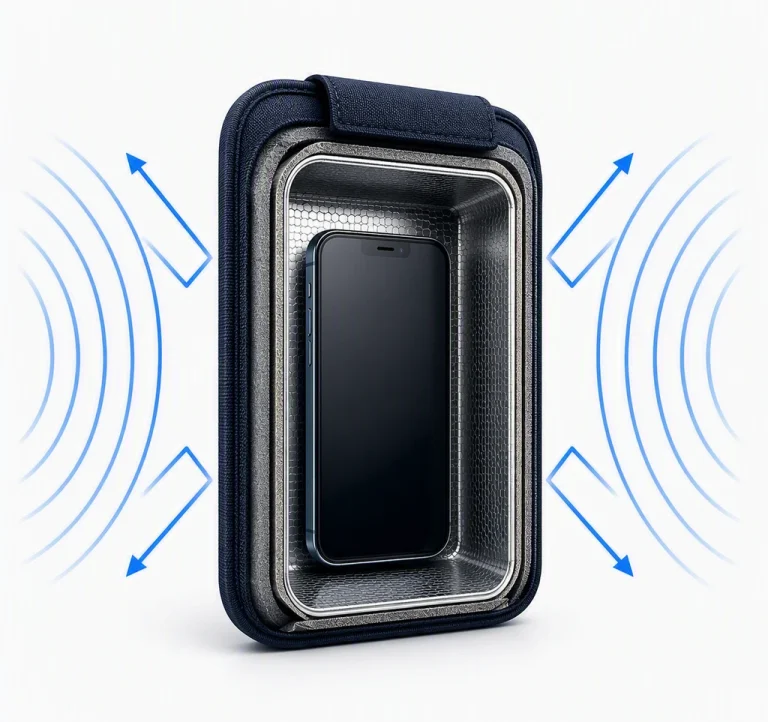
For schools considering a lockable pouch system, FoneAway gives you a practical way to implement the policy without having to collect and centrally store hundreds of individual devices. Students retain possession of their phones while the devices remain securely inside their individually allocated pouches. FoneAway pouches come with robust construction and simple yet powerful industrial-quality magnetic unlocking.
FAQs
Here are some quick answers to some of the most frequently asked questions related to rolling out a new school phone use policy.
Click here to see more Frequently Asked Questions about School Phone Pouches.