


Frequently Asked Questions About School Phone Pouches

School phone pouch FAQs answered. Discover how lockable phone pouches work, signal blocking, safety, costs, implementation and choosing the right system.
School phone pouch FAQs are becoming increasingly important as schools look for practical ways to create genuinely phone-free learning environments. But how do lockable phone pouches work, are they safe, what happens when a pupil needs their phone, and are they really better than simply confiscating devices? For school leaders considering a phone pouch system, these are important questions.
With statutory Department for Education guidance on prohibiting mobile phone use in schools now in force in England, effective implementation has become a vital consideration for school leaders. But choosing a system is about much more than simply buying a pouch for every pupil. Schools need to understand how the tech works, how it slots into their existing behaviour policy, how to introduce it, what happens in an emergency and what features distinguish the best quality, well-designed pouches from the cheaper alternatives. This detailed FAQ guide answers the most common lockable phone pouch questions schools are asking.
What is a school phone pouch?
A school phone pouch is a secure, reusable container that stops pupils from accessing their mobile phones during the school day. It typically consists of:
- A personal pouch given to each child
- A secure locking mechanism
- A controlled unlocking system, administered by authorised staff
The key difference between a phone pouch and traditional confiscation is the pupil keeps their phone with them, so it is secured rather than surrendered. This makes the approach considerably easier to manage because the school doesn’t have to collect hundreds of individual devices, label them to avoid confusion, store them securely and return them at the end of the day. You can imagine how much time and effort this would take teachers day after day, week after week, throughout the entire school year.
A secure, lockable phone pouch removes this substantial admin task while also cutting down on the risk of safeguarding and liability issues associated with having to look after these expensive devices.

Why are schools using lockable phone pouches?
While specific reasons may vary between schools most have just one fundamental objective: to create an environment where young people can concentrate on learning without constant interruptions. Mobile phones introduce a range of distractions into school life, all of which add up to less-than-ideal learning environment:
- Notifications and incoming messages
- Social media posts
- Gaming
- Unauthorised photography and videoing of fellow pupils and staff
- Online arguments and cyberbullying
- Peer pressure and social comparison
- Attempts to avoid school rules
- Disruption during lessons, break-times and lunchtimes.
The Department for Education’s current statutory guidance says schools in England must set in place a policy outlawing mobile phones throughout the school day, including at lessons as well as between lessons, at breaktimes and lunchtime. It also gives guidance on how to implement the new system, communicate it effectively to parents, the responsibilities of staff, which sanctions to apply and what a ‘reasonable adjustment’ to the rules means. A lockable phone pouch supports all this, giving schools a practical way to implement the rules.
Are phone pouches better than confiscating phones?
For many schools, the answer is yes. While confiscation means the school takes responsibility for the device, the process can quickly become very complex because staff need to:
- Collect every pupil’s phone, which eats up a lot of time each morning
- Identify each phone so they don’t get mixed up
- Store them securely
- Protect them from damage or loss
- Retrieve them all at the right time
- Return each phone to its owner, which takes a long time at end end of every day
- Handle disputes about damaged or missing phones.
A lockable pouch changes the model completely. There’s no need for the school to set up a large, secure, phone storage facility, just one of many reasons why lockable pouches have become an increasingly attractive option to create a consistent, relatively simple, less disruptive way to enforce phone restrictions.

Do phone pouches block phone signals?
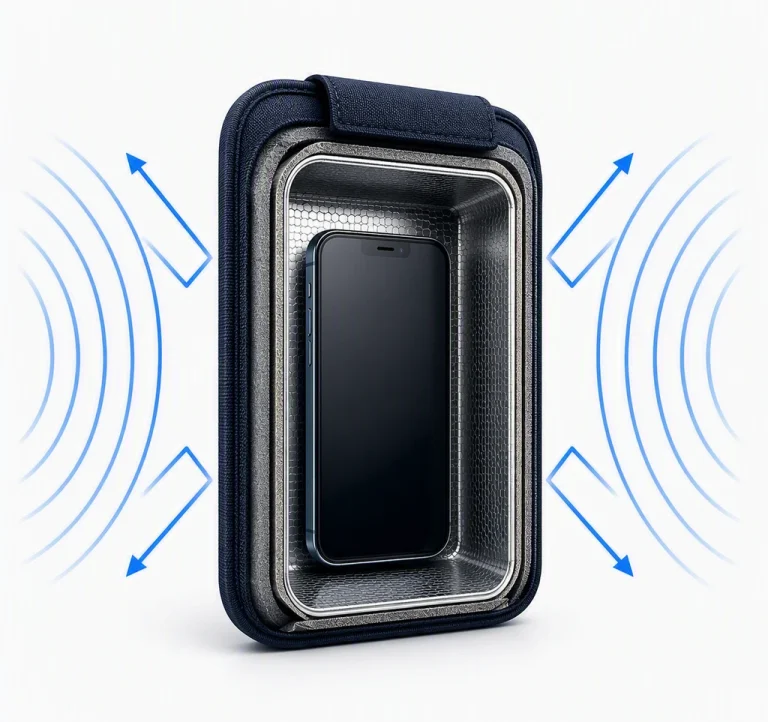
Not all phone pouches do, making it an important distinction when schools are comparing products. A conventional pouch simply prevents physical access to a phone. If the phone is still connected to the mobile network it can receive calls, messages and notifications. This undermines one of the principal objectives of a phone-free environment because pupils are still distracted. But a pouch including Faraday cage-style signal blocking stops signals from reaching the phone while it’s inside. For schools, this means no incoming calls or message notifications, social-media alerts or Bluetooth connections, all of which means less temptation.
Signal blocking is an important benefit to look for when comparing school phone pouch systems. FoneAway, for example, incorporates a signal-blocking inner lining.
Are lockable phone pouches safe?
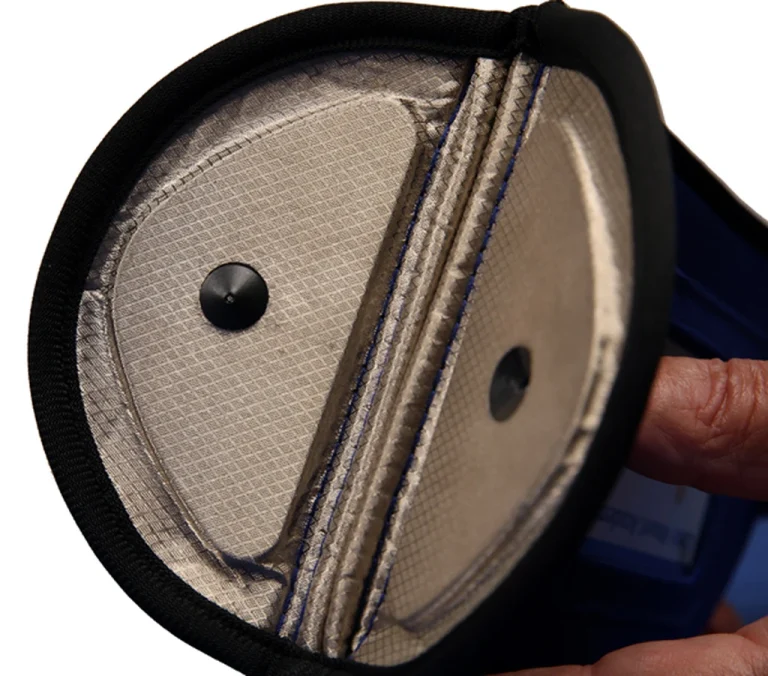
A properly designed pouch should be perfectly safe. But all products are not equal. Because a phone pouch is likely to be handled hundreds of times during its lifetime, the quality of the construction matters.
The locking mechanism – Look for a secure yet simple locking system that’s straightforward for staff to use and, ideally, make sure it doesn’t feature potentially dangerous components like exposed locking pins.
The materials – Pupils will carry their pouches all day, every school day. Look for durable outer materials, strong stitching and plenty of internal padding.
The size – Phones come in different shapes and sizes. A pouch should fit the full range of smartphones rather than designed to suit just one phone size. It’s also useful to have extra space for a smartwatch or similar small device.
Pupil identification – Pick a pouch that can be personalised for clear identification.
School identification – Some schools want their pouches customised with the school name, logo or other identifying information.
These are not just cosmetic. A badly-designed pouch made from cheap materials can quickly become a daily source of frustration for everyone involved. Insight Security’s research into pouch systems pointed out a few significant differences in construction quality, including weaknesses around the stitching, padding and locking.
Can pupils still carry their phones in their pouches?
Yes. The pupil puts the phone into their allocated pouch, closes and locks it, then carries the pouch with them throughout the school day. The school doesn’t need to know where every pupil’s phone is being stored, the pupil is responsible for their own device. At the end of the school day, the pouch is unlocked at an authorised unlocking point. This approach is particularly useful in big secondary schools where collecting, storing and returning a thousand or more devices every day would be an extremely complex and long-winded task.

How are lockable phone pouches unlocked?
The precise mechanism depends on the manufacturer. Many systems use a magnetic unlocking device. The school positions its unlocking points strategically so pupils can access their phones quickly without long queues. The number and location of unlocking points depend on:
- School size and the number of pupils – Bigger schools tend to need more unlocking points
- School layout and the number of exits
- The way pupils typically move around the school
- Peak collection times.
The idea is to form a new habit where phone locking and unlocking are part of the normal routine. FoneAway’s system uses dedicated unlocking equipment, with the appropriate number of unlocking points depending on the school’s layout and expected user throughput.

What happens if a pupil needs their phone during the school day?
This important issue should be addressed in the school’s mobile phone policy before the system goes live. A phone-free policy doesn’t mean every pupil must be treated identically in every single circumstance. Department for Education guidance says schools should consider what adaptations and reasonable adjustments they’ll accept, with clear procedures for pupils with legitimate reasons for phone or smart device access, for example medical, safeguarding and individual support requirements. The important point is that exceptions should be planned and documented, not improvised every time a pupil asks to use their phone. Basically the system should support the school’s policy, not dictate it.
Do phone pouches prevent pupils from using another phone?
No system solves every aspect of mobile phone misuse. A pouch can only restrict access to the devices the school knows about, part of a wider mobile phone policy covering the things pupils can and cannot bring to school, what happens if a pupil tries to avoid the policy and which sanctions to apply. The pouch itself is the physical enforcement mechanism and the policy is the foundation.
The strongest school policies combine clear expectations with:
- Consistent enforcement
- Effective communication with parents
- Appropriate exceptions and proportionate sanctions
- Practical arrangements for storage and restriction
- A consistent approach by staff.
Will pupils try to damage or tamper with the pouches?
This is one of the most common concerns raised by schools as well as the main reason why quality matters. The best quality pouches are tough and strong, designed specifically to be used daily. But schools do need to set up clear procedures for damaged or deliberately tampered-with pouches. A sensible implementation strategy includes:
- Giving each pupil an identifiable pouch so they have a sense of ownership
- Making pupils fully responsible for their pouch
- Explaining exactly how the locking mechanism works
- Demonstrating how to use the pouch properly
- Including deliberate damage in the school’s behaviour policy
- Keeping a small number of spare pouches just in case.
FoneAway recommends ordering extra pouches to cover lost or damaged units and provide spares for new pupils joining during the academic year.
How many phone pouches does a school need?
It makes sense to equip the school with one pouch per pupil plus a sensible contingency. A small contingency stock can prevent a damaged or missing pouch from becoming an excuse for a pupil to carry an unsecured phone. If staff are also expected to store their phones during school hours, which makes sense, they’ll each need their own pouch. A school with 800 pupils might buy 800 pupil pouches plus extras for staff, contingency, replacements and new pupils. It makes sense to discuss quantities with the supplier before ordering.
How much do school phone pouches cost?
The total cost depends on the type of pouch, the quantity, the unlocking equipment, any customisation and other implementation needs. Bear in mind that the cheapest pouch is not necessarily the cheapest solution if you end up needing frequent replacements or poor quality actually creates operational problems. It’s best to compare the total system cost rather than comparing the price of individual pouch designs. You could ask the supplier these questions:
- What is included in the price you have quoted?
- Is the unlocking equipment included?
- How many unlocking points will we need?
- Is there a minimum order?
- Does the unit cost come down for large orders?
- Are discounts available for larger schools?
- Is school branding available?
- What happens if a pouch is damaged?
- How quickly can they supply replacement pouches?
- Is the pouch designed for signal blocking?
- What support is available during implementation?
What should schools look for when buying phone pouches?
This is perhaps the most important of all school phone pouch FAQs. Before placing an order, assess the complete system rather than looking at photographs and prices.
- Locking quality – Is the locking mechanism secure, reliable and easy to operate?
- Signal blocking – Does the pouch genuinely block signals or just prevent physical access?
- Construction – Is it designed for everyday school use?
- Phone capacity – Will it fit the different smartphone designs pupils are likely to own?
- Identification – Can pupils identify their own pouch easily?
- School branding – Can they be customised?
- Unlocking arrangements – How many unlocking stations will the school need?
- Replacement availability – Can extra pouches be delivered quickly?
- Supplier support – Does the supplier understand school implementation or are they just selling a product?
- Total cost of ownership – What will the system cost over several years? This is particularly important for schools with tight budgets.
Can phone pouches help improve behaviour?
While they can contribute to a calmer school environment, schools should avoid treating a phone pouch as a magic solution to every behaviour problem. The objective is actually very straightforward: to remove access to a major source of distraction so that teachers can teach and pupils can learn without smartphones competing for their attention.
Schools introducing effective phone restrictions often report fewer interruptions, improved lesson flow, reduced social media disruption and less conflict between pupils and staff. But the biggest benefit of all is probably consistency. When everyone follows the same easy process every day, teachers no longer need to negotiate with individual pupils about whether a phone is ‘really being used’. The rule becomes very simple: Phone in pouch. Pouch locked. School day begins.
How should a school introduce a phone pouch system?
The Department for Education’s statutory guidance puts clear emphasis on communicating the policy to pupils and parents, making implementation just as important as the product itself. When a school communicates the new system clearly before launch day and makes sure pupils, parents and staff understand exactly what will happen, it is more likely to experience a successful rollout. Here’s some advice about how to structure phone pouch implementation.
Before Launch
- Review the school mobile phone policy
- Decide what devices are covered
- Establish any legitimate exceptions
- Decide where to put the unlocking points
- Order enough pouches and spares
- Train the relevant staff
- Communicate the policy to parents.
On Launch
- Demonstrate the pouch to pupils so they know exactly how it and the system works
- Give every pupil crystal clear instructions
- Make the process quick and easy so it soon turns into a routine
- Make sure staff know how to apply the policy consistently.
After Launch
- Monitor pupil and staff compliance
- Record any recurring problems
- Replace any damaged pouches
- Review your school’s exemptions
- Gather feedback from staff and pupils
- Adjust the system procedures if you need to.
What should schools tell parents?
Parents have perfectly reasonable concerns about their children being unable to access their phones. The answer isn’t to tell parents phones are banned. It’s a lot subtler than that. You’ll want to explain:
- Why the policy is being introduced
- When pupils must secure their phones
- Exactly how the pouch works
- Where pupils can access their phones after school
- How parents should contact the school during the day
- What happens in an emergency
- Which pupils have been given exceptions and why
- What happens if their child breaks the rules.
Do all this and your school can turn a potentially contentious issue into a positive shared effort to create a better learning environment.
If you’d like more support the Department for Education has published specific guidance for schools on the best ways to communicate mobile phone policies to parents.
Are FoneAway phone pouches suitable for schools?
FoneAway has been specially developed as a reusable lockable phone pouch system for environments where mobile phone access needs to be restricted. For schools, the design combines a secure locking mechanism with signal-blocking material, protective internal padding, an identification area and – if you need it – customised branding for your school. The pouch fits all modern smartphones and provides extra space for a smartwatch or similar device. You can learn more about FoneAway lockable phone pouches for schools here.
The most important consideration of all isn’t pouch availability. It’s whether the system as a whole will work in your unique school environment. A good supplier should be able to help answer all the right questions before you place your order.